Camping in Saxony
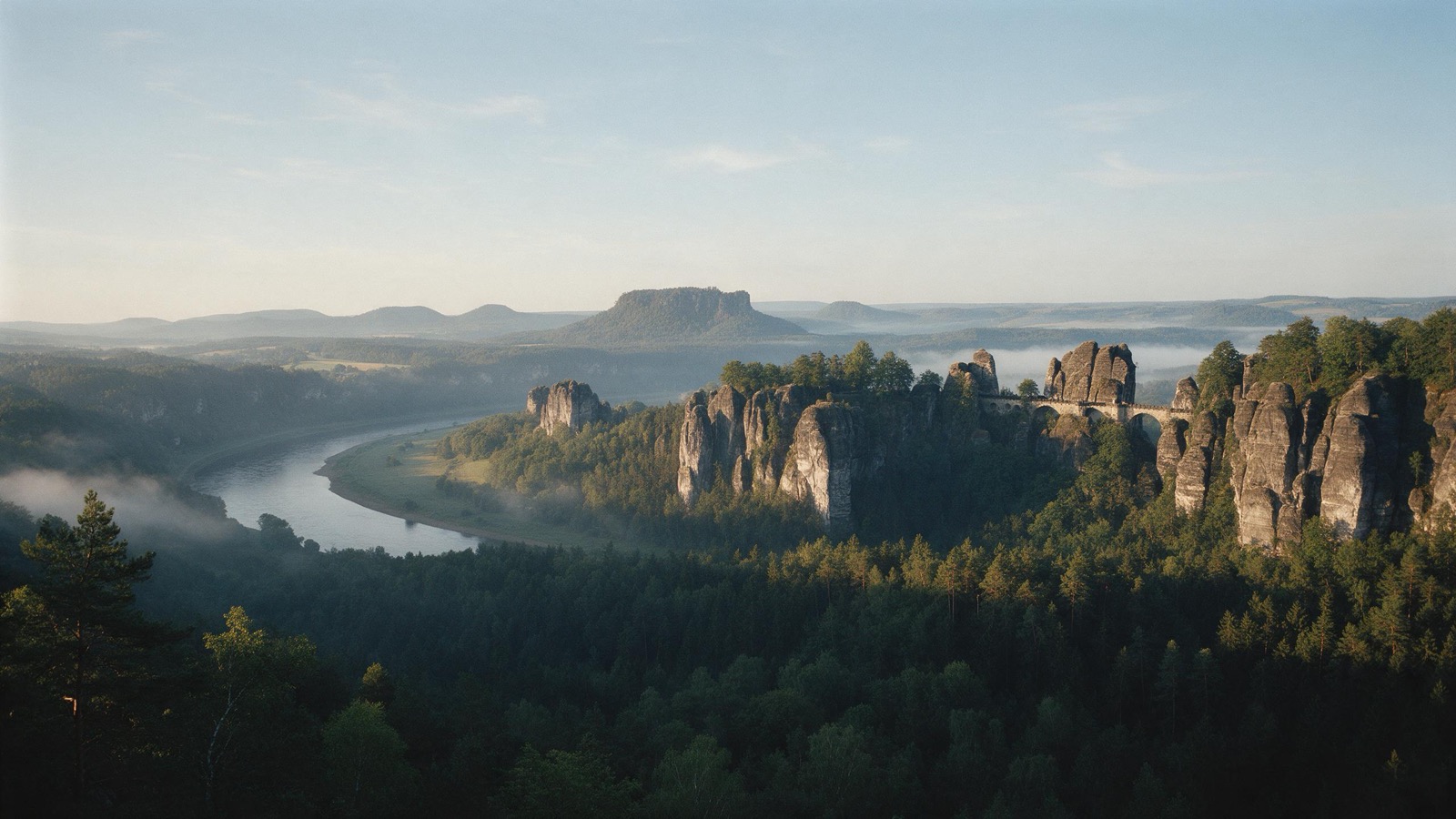
Saxony fits two very different mountain ranges into a small area, with a wide river valley between them. Saxon Switzerland and its sandstone towers are the best-known part and draw hikers and climbers. The Ore Mountains lie higher and are quieter, and along the Elbe between Meissen and Dresden they grow wine.
The year in this region
October: The Ponds Are Fished Out
More than 350 ponds lie in the Biosphärenreservat Oberlausitzer Heide- und Teichlandschaft, spread over 39 groups, the first of them dug in the 13th century. In October the pond keepers let the water out and lift the carp. The Lausitzer Fischwochen run from late September to early November. The reserve covers over 30,000 hectares.
In the middle of the month the sun rises at 7:29 AM and sets at 6:15 PM. That leaves 10 hours and 47 minutes of daylight.
What nature does this month
- Beech turns to autumn colours around October 16 (usually between October 9 and October 23)
- Oak turns to autumn colours around October 21 (usually between October 12 and October 28)
Water and air: Open-Meteo, measured averages. How busy: share of school holidays 2027 across all sixteen federal states. Nature dates: German Weather Service, phenological observations 2014 to 2026 at 332 stations in the region, typical day.
Tours in this region
Marked tours that fit into a day from a site, and one multi day tour per kind.
- Hiking
Malerweg
The way of the Romantics through Saxon Switzerland, walked by Caspar David Friedrich and Ludwig Richter before they painted it. It climbs ladders and stairways between the sandstone towers and crosses the Elbe by ferry at Schmilka. The eight stages are laid out so that each ends in a place with somewhere to stay, from Stadt Wehlen through Schmilka to Pirna.
116.5 kmMulti day tour
- Hiking
Kammweg Erzgebirge-Vogtland
The trail follows the Ore Mountain ridge for a long way, mostly between five hundred and nine hundred metres and close to the Czech border, then carries on through the Vogtland to Blankenstein in Thuringia. Up there lie raised bogs with boardwalks and hay meadows mown for centuries. In winter the higher stretches of the same ridge are among the most snow reliable spots in Germany's low mountain ranges.
287.3 kmMulti day tour
- Hiking
Forststeig Elbsandstein
A trail for people who want to carry their own: nights are spent in simple trekking huts and at marked bivouac sites, and there is little to buy along the way. It runs west of the Elbe through thinly populated forests, deliberately following little used paths instead of the known routes of the Malerweg. Open from April to October, with a map and a ticket.
104.3 km2911 m ascentMulti day tour
- Hiking
Oberlausitzer Bergweg
From Neukirch to Zittau over the granodiorite and phonolite tops of the Upper Lusatian hills, rising above the broad valleys between them. Every summit is a short climb with a long view, and in between the path runs through villages of timber framed Umgebinde houses. At the end stand the sandstone rocks of the Zittau mountains.
127.5 kmMulti day tour
- Cycling
Elberadweg
For years first or second among Germany's long distance cycle routes in the ADFC cycling travel survey, and the reason is the course: from the Czech border to the North Sea it runs almost entirely downhill. It follows the river through the Elbe sandstone hills, past Dresden and Meissen, then out into the open floodplain. Ferries stand in for the missing bridges.
812.9 kmMulti day tour
- Cycling
Mulderadweg
The route follows the Zwickau Mulde from Schöneck in the Vogtland to Sermuth, where it joins the Freiberg Mulde to form the united Mulde. It links mining towns with floodplain forest and runs through narrow valleys you never see from the road. The gradient works for you if you ride downstream.
158.2 kmMulti day tour
- Cycling
Elster-Radweg
From the source in the Czech Elster mountains through the Leipzig floodplain forest to Halle, where the White Elster flows into the Saale. The upper part is narrow and wooded, the lower wide and flat. Around Leipzig the route runs between the lakes that grew out of open cast mines, most of which formed only this century.
246.8 km600 m ascentMulti day tour
- Cross country skiing
Kammloipe
Thirty six kilometres tracked end to end, from Johanngeorgenstadt to Schöneck, along the ridge between the Ore Mountains and the Vogtland. The base is an old forest road, so it is wide and even, with little gradient. If you do not want to ski back, take the train: both endpoints have a station, and in Schöneck the trains stop right at the trail lodge.
35.6 km
Tours: © OpenStreetMap contributors, ODbL. Lengths computed from the mapped course, as of September 11, 2026.
Animals you can meet here
 March to September
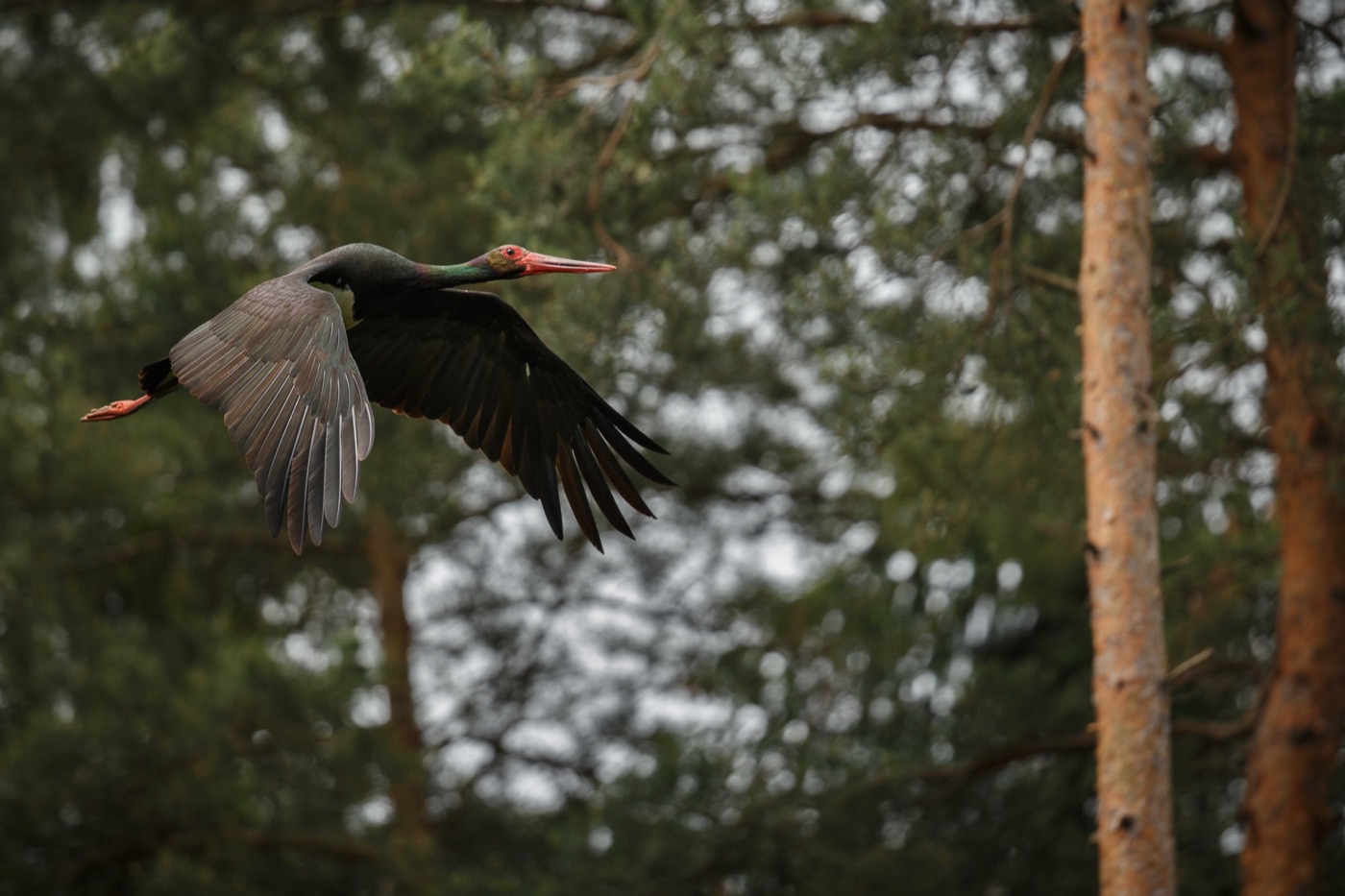
Black stork
Unlike its white relative it avoids villages and lives hidden in old forest, along streams with shallow water. If you see one it is usually in flight over a clearing, and that stays a rare moment.
 September to October
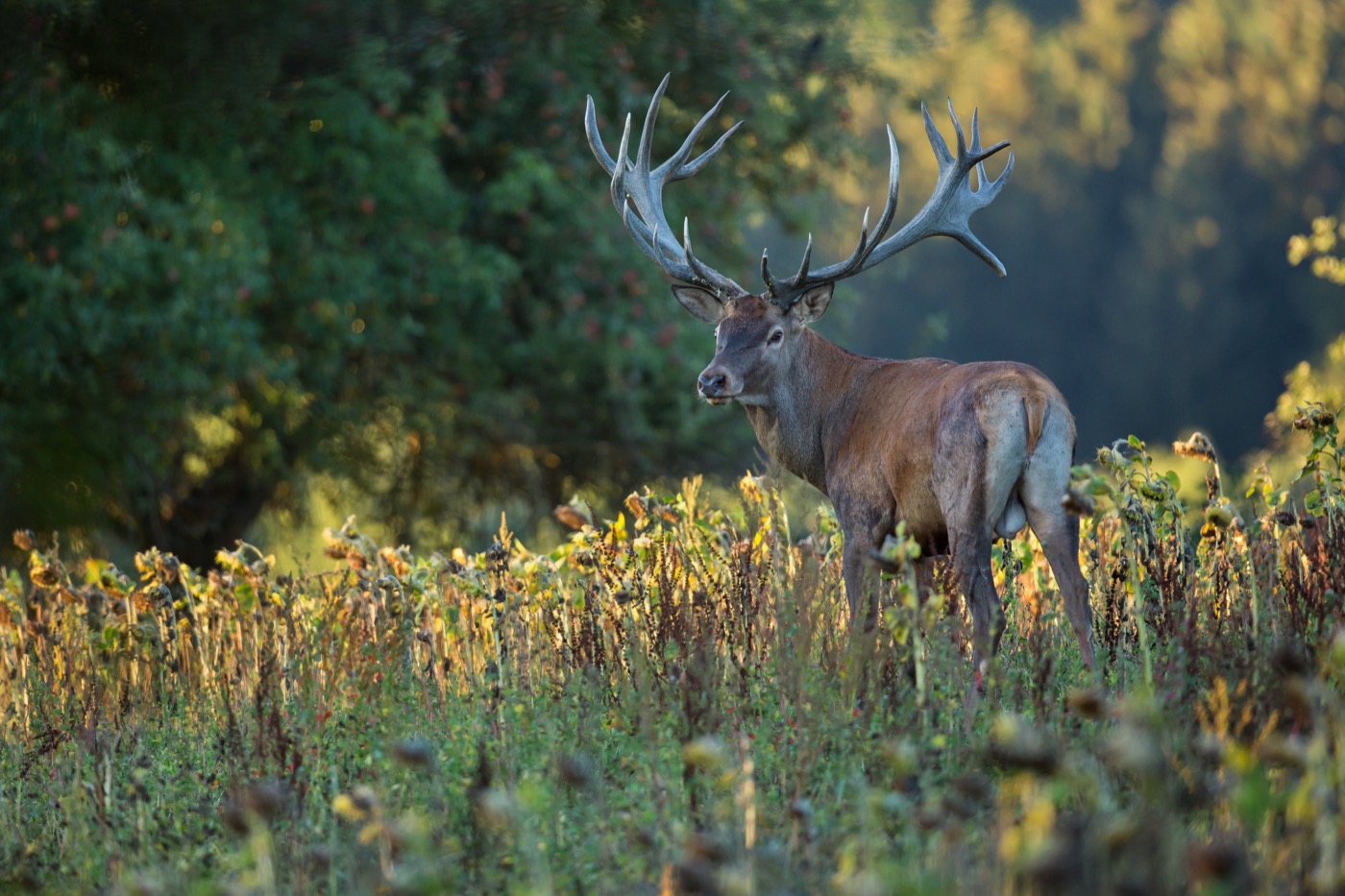
Red deer
The rut starts in September, and then the stags roar mainly early in the morning, in the evening and at night. You hear them from far away, and many forests have hides at the meadows where you may watch.
 all year
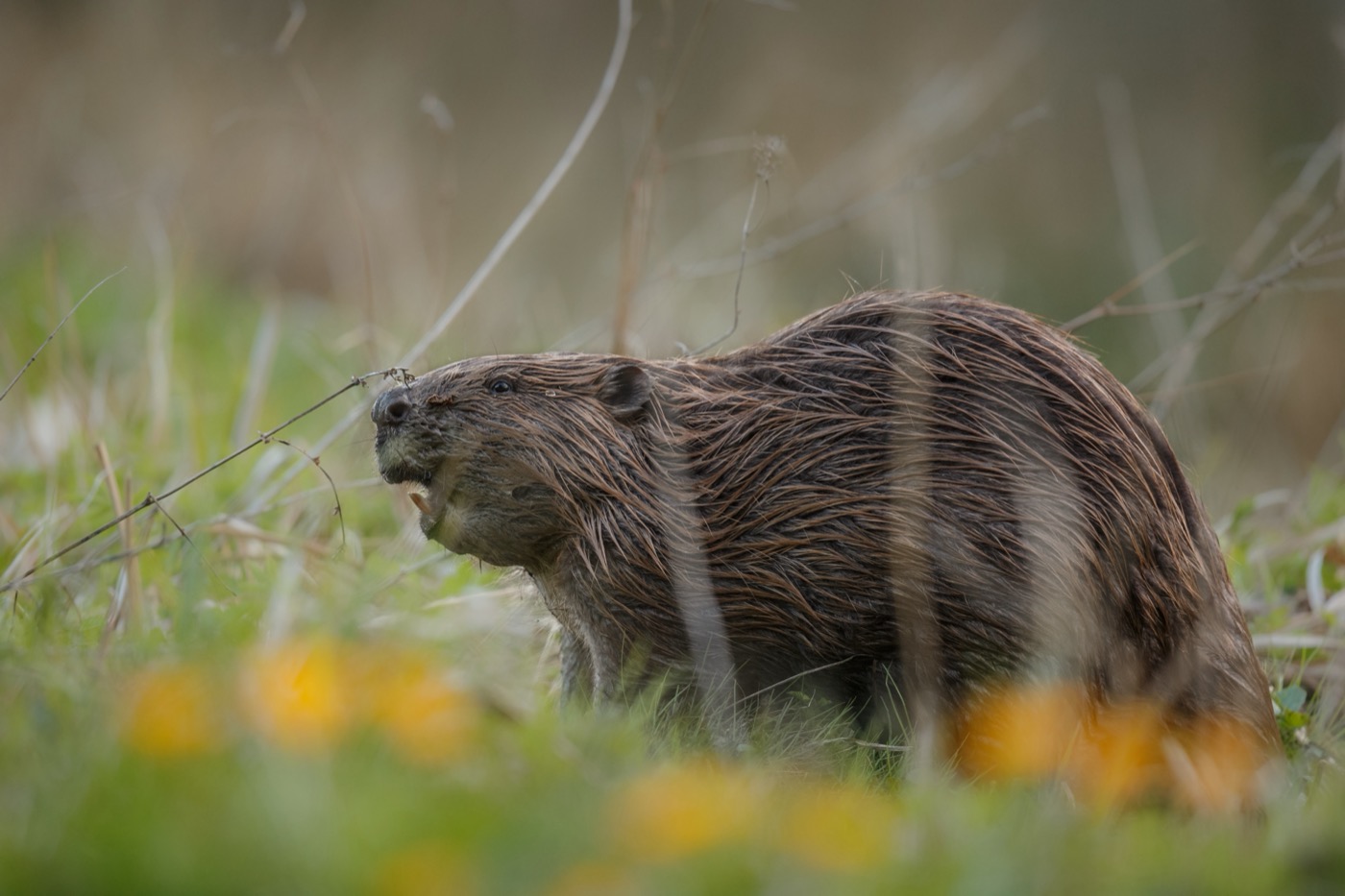
Eurasian beaver
The beaver itself is rarely seen, its work everywhere: gnawed trunks at the bank, dams across the stream, flooded ground full of dead wood. Sit quietly by the water at dusk and you hear it before you see it.
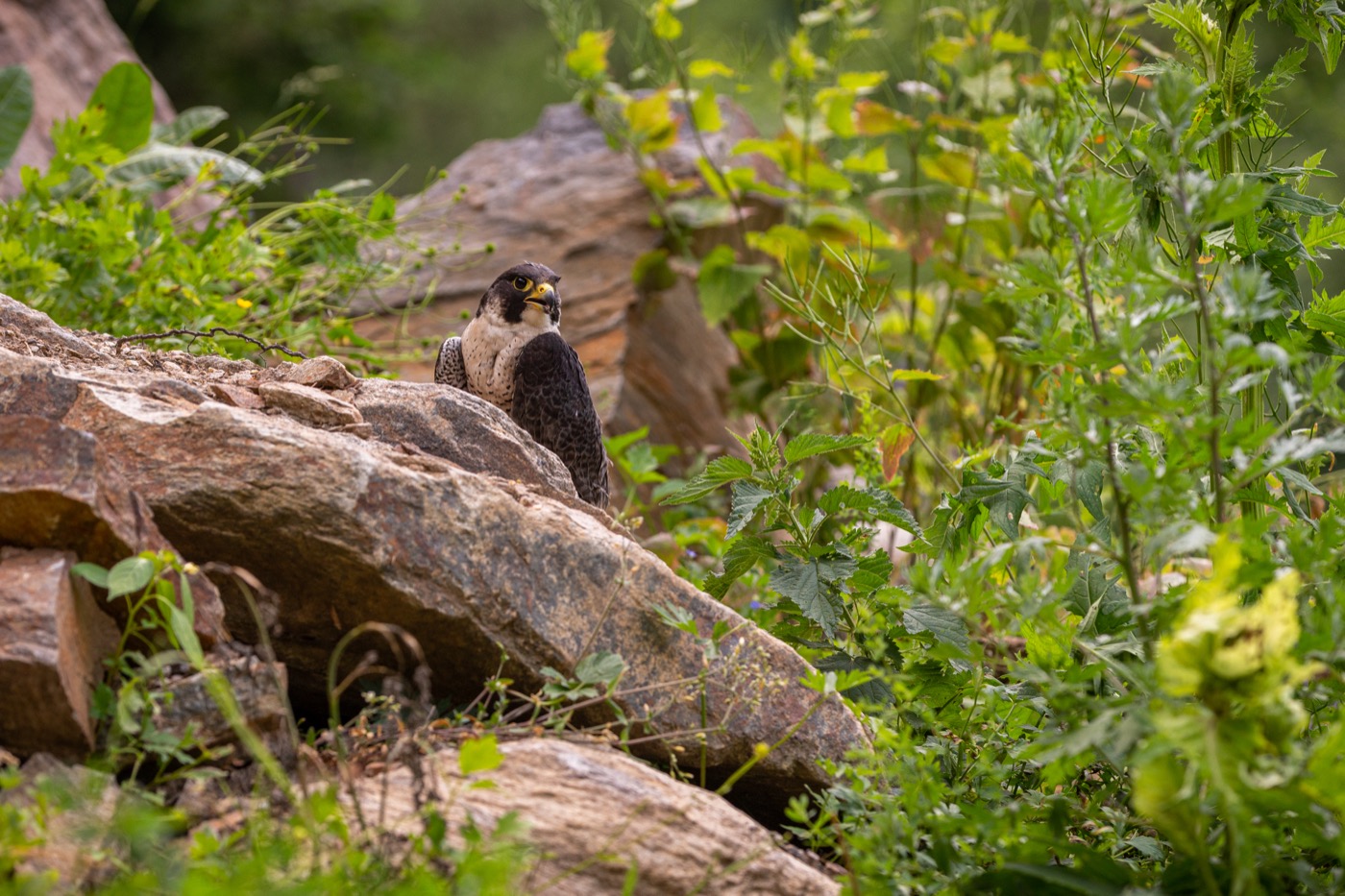 March to June
Peregrine falcon
The fastest animal on earth passes 300 kilometres an hour in a stoop. It nests on the cliffs above the rivers, and during the breeding season single climbing crags stay closed so it can raise its young in peace.
Pictures: Freepik
Getting there
- 0 h 45 minDresden
- 1 h 45 minLeipzig
- 2 h 45 minBerlin
- 4 h 45 minMünchen
- 5 h 00 minFrankfurt am Main
- 6 h 00 minHamburg
Good to know
Overnight only at approved sites
Caravans and motorhomes may not be set up in Sächsische Schweiz national park, and sleeping outside buildings is allowed only at the Boofen in connection with climbing. In the surrounding national park region, sleeping in a vehicle is only permitted at approved sites. Book a pitch.
The Elbe is not a swimming spot
The river looks calm and is not. Currents run between the groynes below the surface, and commercial shipping uses the channel. For swimming there are the reservoirs in the Ore Mountains that allow it, and the lakes around Leipzig.
Boofen and open fire
Sleeping outdoors in the national park is allowed only at the 58 marked rock overhangs known as Boofen, from 16 June to 31 January and only in connection with climbing. Fire is prohibited there without exception. The forest floor turns highly flammable in dry summers, and most wildfires in the national park start from illegal campfires.
Peregrine falcons on the rocks
Peregrine falcons breed on several climbing summits, eagle owls on a few of them. The national park administration closes the affected rocks and paths from spring into summer. Which ones it hits changes every year.
Ferries instead of bridges
Between Pirna and the Czech border only Bad Schandau has a road bridge across the Elbe. To reach the other bank, Kurort Rathen for instance, you take a ferry. The one to Rathen is the last reaction ferry in the region and carries people and bicycles only, so the motorhome stays behind.
Dogs cannot climb the Stiegen
Dogs must be kept on a lead in the national park. The old Stiegen are fitted with iron ladders and narrow clamps, which no dog can manage. For walks with a dog the paths across the Ebenheiten work well, the flat uplands above the Elbe valley that the mesas rise out of.
Protected landscapes
- National park
- Sächsische Schweiz
- Biosphere reserve
- Oberlausitzer Heide- und Teichlandschaft
- Nature park
- Dübener Heide
Names and boundaries: © OpenStreetMap contributors.
About this region
Saxony has Saxon Switzerland with its sandstone towers, the Ore Mountains along the ridge towards the Czech border, the Vogtland and Upper Lusatia with its pond landscapes. Around Leipzig, former opencast mines have become lakes.
Saxon Switzerland fills up on fine weekends; the Ore Mountains and Lusatia never do. In winter the cross country trails run in the Ore Mountains.
