Camping on Rügen
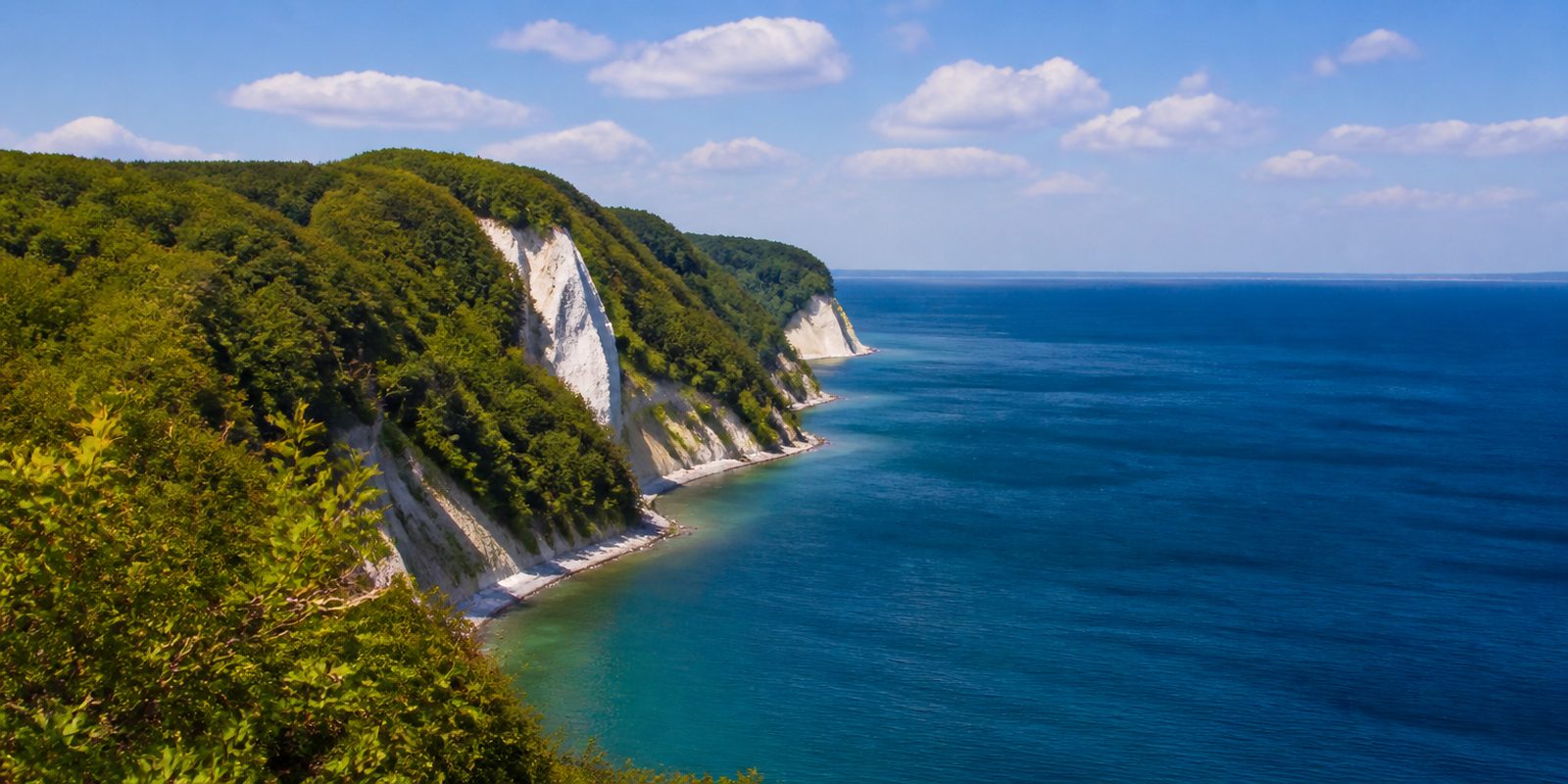
At 926 square kilometres, Rügen is the largest island in Germany. It lies off the coast of Mecklenburg-Vorpommern, and since October 2007 the 4.1 kilometre Rügenbrücke at Stralsund has crossed the water beside the older two-lane Rügendamm. The chalk cliffs are what the island is known for. In the Nationalpark Jasmund they rise as much as 118 metres above the sea, the Piekberg, the highest point of the park, reaches 161 metres above sea level, and the beech woods of the Stubnitz have been a UNESCO World Heritage Site since 2011. In the southeast the Südost-Rügen biosphere reserve covers around 230 square kilometres and protects the Mönchgut and Zicker peninsulas, the Granitz and the offshore island of Vilm with their dry grassland and bodden waters. In between, the land breaks into small pieces. Peninsulas, spits and bodden such as the Kleiner Jasmunder Bodden and the Rügischer Bodden give the island a coastline of some 574 kilometres. About 64,000 people live here. Destinations run from the Baltic resorts of Binz, Sellin and Göhren in the southeast to the lighthouses at Kap Arkona in the far northwest.
The year in this region
October: Peak crane migration over the island
Between mid- and late October, large numbers of common cranes return to their resting grounds in northwestern Rügen before continuing on toward southwestern Europe. Reed-lined bays of the bodden lagoons serve as their sheltered roosting sites.
In the middle of the month the sun rises at 7:34 AM and sets at 6:10 PM. That leaves 10 hours and 36 minutes of daylight.
What nature does this month
- Apple picking starts around October 9 (usually between October 6 and October 21)
- Beech turns to autumn colours around October 13 (usually between October 1 and October 20)
- Oak turns to autumn colours around October 20 (usually between October 10 and October 23)
Water and air: Open-Meteo, measured averages. How busy: share of school holidays 2027 across all sixteen federal states. Nature dates: German Weather Service, phenological observations 2014 to 2026 at 14 stations in the region, typical day.
Tours in this region
Marked tours that fit into a day from a site, and one multi day tour per kind.
- Hiking
Hochuferweg Sassnitz–Königsstuhl
High on the chalk coast between Sassnitz and the Königsstuhl, the way runs through the beech forest of the Jasmund national park, which is world heritage. Between the trunks the view opens again and again down onto the water, at the end from 118 metres up. The path is narrow and rooty. Early in the morning it is still almost empty.
11.2 km
- Hiking
Wanderweg zum Königstuhl
From the Hagen forest car park a broad, almost level track leads through old beeches to the national park centre at the Königsstuhl. Along the way the hands-on stations of a forest trail invite you to stop, and clearings open in the leaf canopy between them. A pushchair gets through here. At the end you stand high above the chalk and look out over the Baltic.
2.8 km
- Hiking
Rügener Bodden-Panoramaweg
Between Neuenkirchen and Mukran the route runs mostly on natural ground, with gravel and short stretches of asphalt in between. Above the Tetzitzer See it climbs into the Banzelvitzer Berge, where pines stand on the steep slope. The view reaches far across the Großer Jasmunder Bodden. Later come Schloss Ralswiek, the Waldpark Semper and, at the end, the flint fields near Mukran.
24.2 km
- Hiking
Pfad der Muße & Erkenntnis
In the Goor near Lauterbach the path runs through old oak and beech woodland that is left to develop undisturbed again. Nineteen stations invite you to stop, and between them lie massive trunks and old burial mounds under the leaves. Through the crowns the Greifswalder Bodden flashes into view, with the island of Vilm in front of it. Walking slowly pays off here.
4.2 km
- Cycling
Rügen-Rundweg
Once around Germany's largest island, which shows all its sides on the way: chalk in the east, shallow lagoons in the west, seaside resorts with white villas in between. Most of it rolls along flat. On Jasmund a well made forest track leads from Sassnitz up to the Königsstuhl, twelve kilometres through beech forest. With time to spare, add the detour to Hiddensee.
264.1 kmMulti day tour
- Cycling
Ostseeküsten-Radweg
Section Deutschland Rügen-Nord
The northern section starts in Stralsund, first takes the west side of the island northwards and crosses to the Wittow peninsula on the Wittower Fähre. Then the route turns east, through the beeches of the Jasmund national park above the chalk coast. At the Königsstuhl the section ends, the south of the island follows on the next one. The ferry timetable sets the rhythm.
156 kmMulti day tour
- Cycling
Östlicher Backstein-Rundweg
From Rostock the route runs along the coast to Stralsund and Greifswald and comes back inland on quieter ways. Along it stand the great brick churches of the Hanseatic towns and, just before Greifswald, the monastery ruin of Eldena. Between the towns lie the Rostocker Heide, the lagoon waters off Fischland-Darß-Zingst and the quiet valleys of Trebel and Recknitz. Most of the riding is on firm surface.
385.3 kmMulti day tour
Tours: © OpenStreetMap contributors, ODbL. Lengths computed from the mapped course, as of September 12, 2026.
Animals you can meet here
 all year
White-tailed eagle
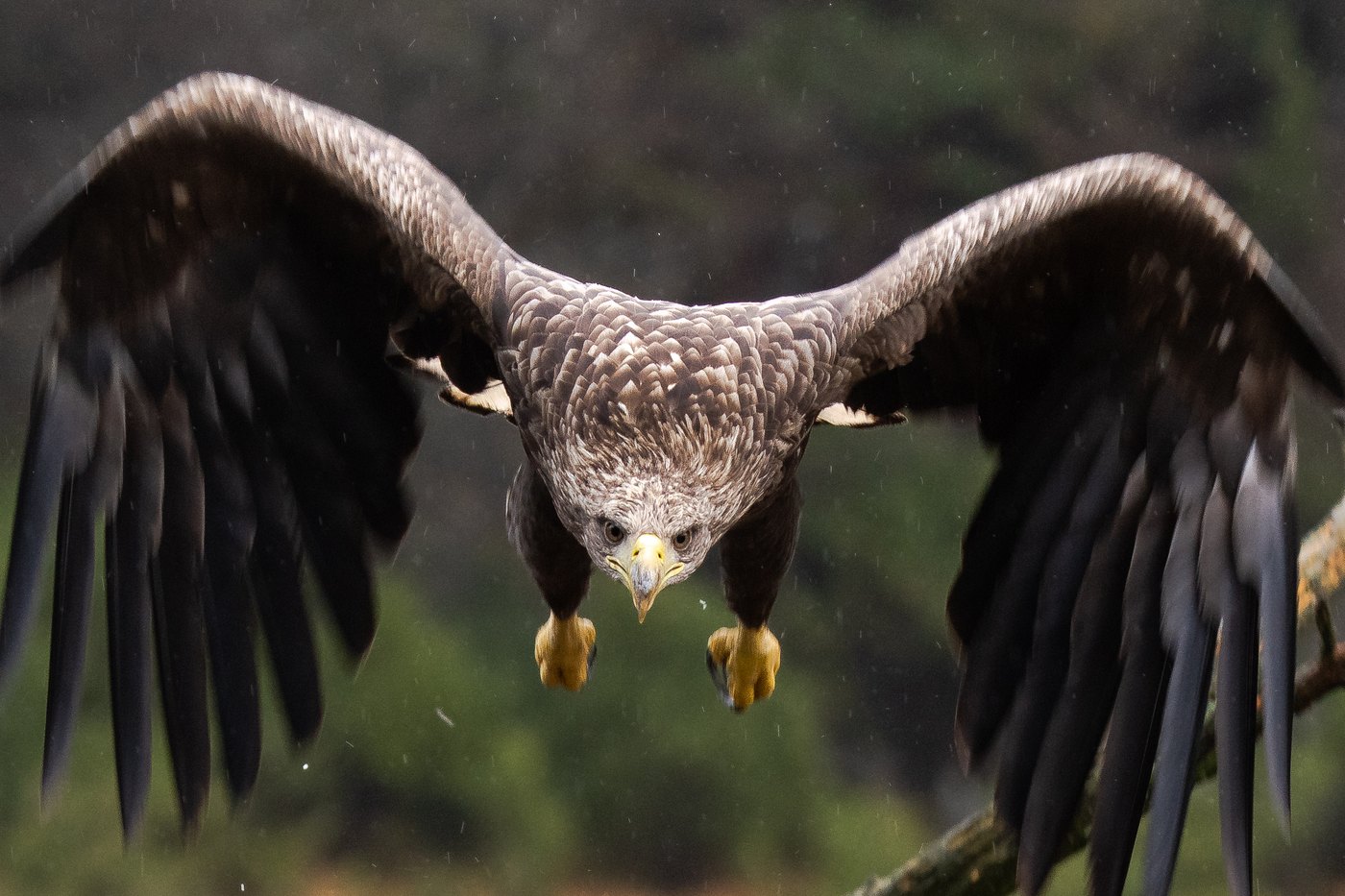
Several pairs of white-tailed eagles nest in the old beech trees of the Stubnitz in Nationalpark Jasmund. Over the chalk coast the eagle glides on a wingspan of nearly two meters, its wings held flat like a plank, the white tail catching the eye from far away. It lives here year round, hunting fish and waterbirds above the beech forest and the coast.
 March to November
Common crane
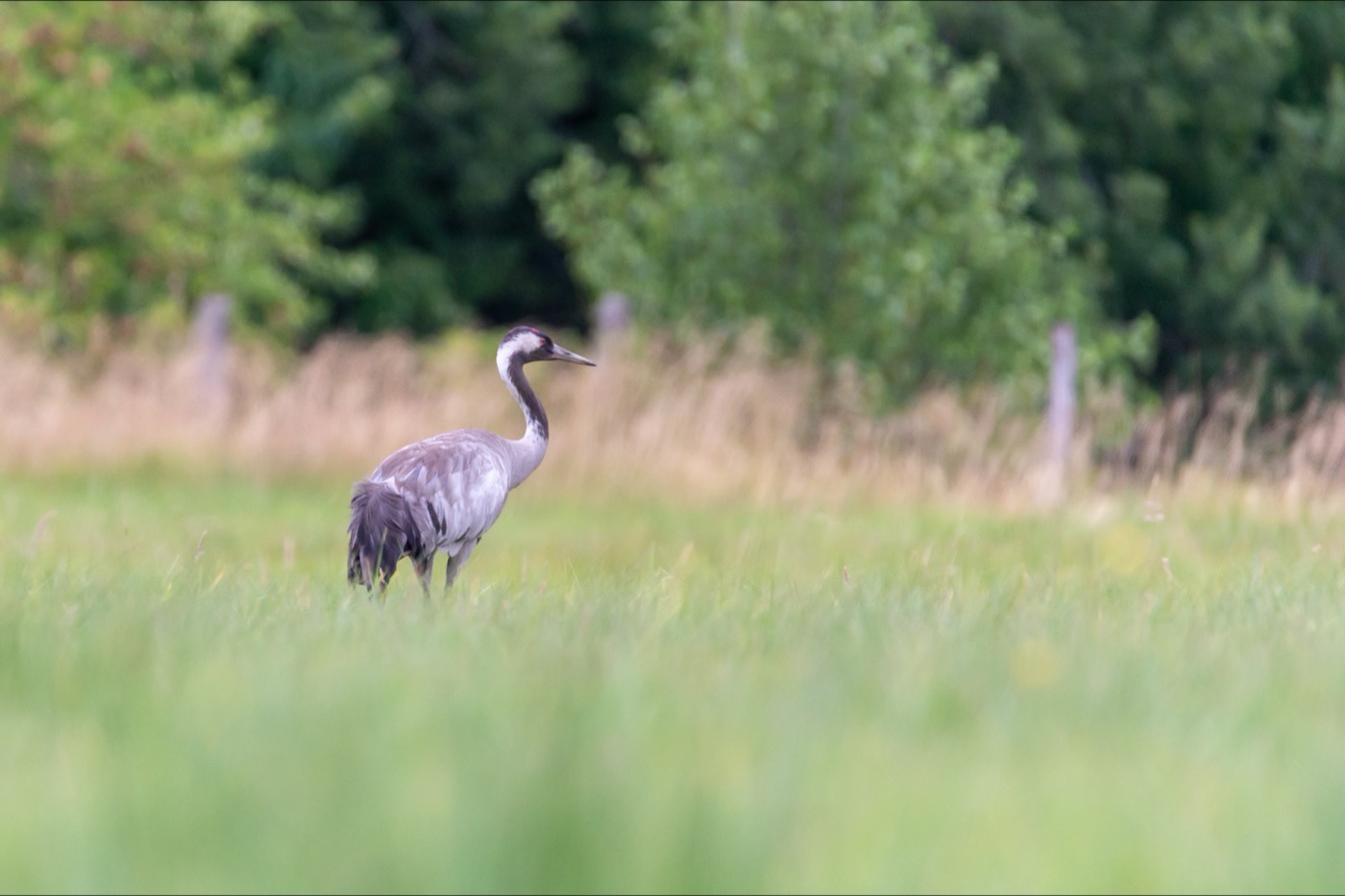
In northwestern Rügen, common cranes rest in the reed-lined bays of the Bodden lagoons, which serve them as sheltered roosts. In March they stop here for several days on their way to breeding grounds further north, and between mid and late October they return in large numbers before moving on toward southwestern Europe. Their loud, trumpeting calls give away the grey birds with the red patch on the crown long before they come into view in the bays.
 May to October
Grey seal
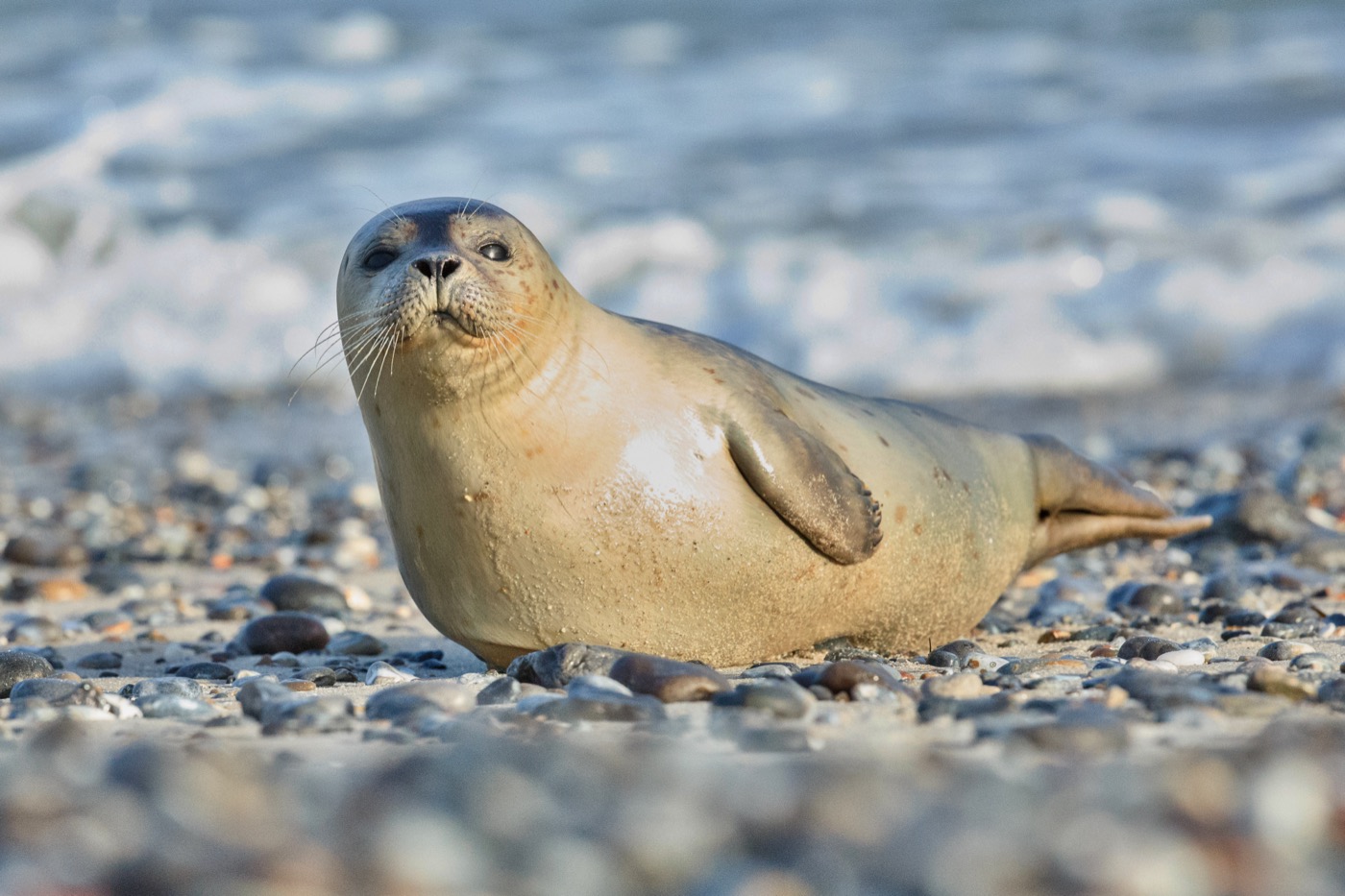
Grey seals in the Rügischer Bodden are best spotted on observation boat trips that run from the harbor at Lauterbach between May and October. The animals haul out on sandbanks to rest, recognizable from a distance by their long, horse-like head and grey mottled fur. In calm weather their heads also surface right in the Bodden next to the boats.
 all year
Fallow deer
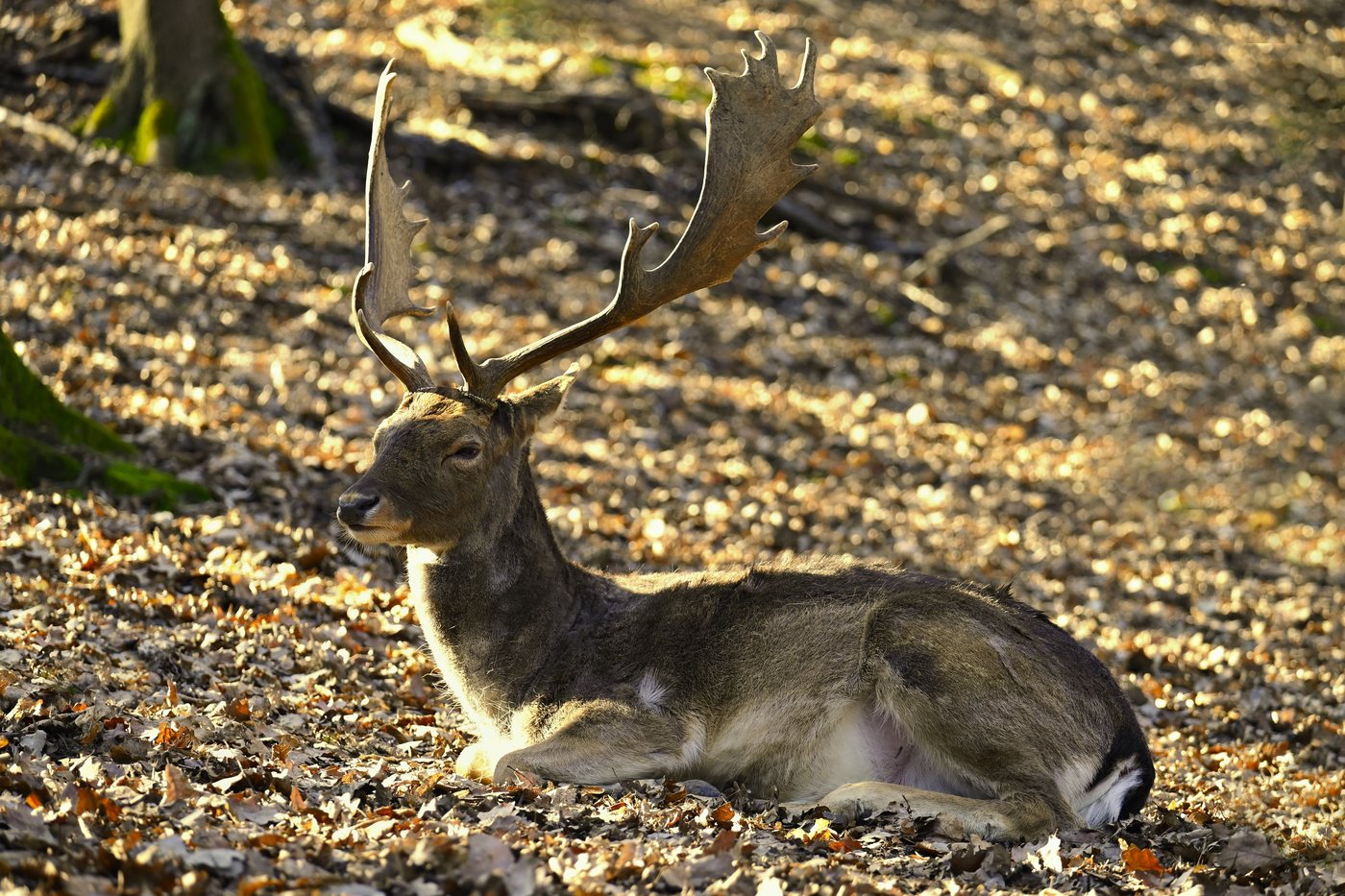
Fallow deer can be watched up close year round in the game enclosure of the classicist Schlosspark Putbus. The bucks carry broad, shovel-shaped antlers, and while the herd wears a reddish-white spotted coat in summer, it turns greyish brown in winter. Amid the park's old trees the herds cross the meadows and come close to the paths.
Pictures: Freepik
Getting there
- 1 h 30 minRostock
- 3 h 15 minBerlin
- 3 h 15 minHamburg
- 7 h 15 minKöln
- 7 h 45 minFrankfurt am Main
- 8 h 45 minMünchen
Good to know
No water sports in Jasmund
Angling is not allowed in Jasmund national park. Within a zone about 500 metres wide off the shore, kayaks, SUP boards, kites and motorboats stay out as well. For swimming and paddling there are the beaches of the Baltic resorts, in Binz or Sellin for example.
Leash Requirement in the National Park
Throughout Nationalpark Jasmund, dogs must be kept on a leash at all times, including on the trail to the Königsstuhl. Dogs are not allowed inside the visitor center itself, but free waste bags are available at the entrances.
Consideration at the Crane Resting Sites
The cranes' resting sites in northwestern Rügen lie in reed-lined bodden bays; the best way to observe them is from the designated paths and at a good distance. The small population that lives on the island year-round is sensitive to disturbance near its roosting sites.
Lift Bridge on the Rügendamm
The Ziegelgrabenbrücke on the Rügendamm usually opens for ship traffic at 5:20 a.m., 8:20 a.m., 12:20 p.m., 3:20 p.m., 5:20 p.m., and 9:30 p.m., each time for about 20 minutes. Drivers who want to avoid these windows can use the parallel, fixed Rügenbrücke instead.
Overnight Stays Only in Designated Areas
Overnight stays in a motorhome, camper, or tent outside official campgrounds and designated sites are not permitted on Rügen or anywhere in Mecklenburg-Vorpommern, and this applies without exception in the national park and nature reserves. Private vehicle traffic around Nationalpark Jasmund is also restricted; vehicles park at the main lot in Hagen.
Fires Only in Designated Spots
Open fires and grilling are not allowed everywhere on the island's beaches. In Göhren, for example, only beach access points 14 and 15 are designated for this and must be registered in advance with the resort administration. In the other Baltic Sea resorts, check with the local municipality about which areas are permitted.
Protected landscapes
- National park
- Jasmund
Names and boundaries: © OpenStreetMap contributors.
About this region
Rügen is Germany's largest island at 926 square kilometers, linked to Stralsund by the Rügenbrücke. Known for the chalk cliffs in Nationalpark Jasmund, campsites and pitches range from the Ostseebäder to Kap Arkona.
High season is summer, with the Störtebeker-Festspiele in Ralswiek. Things quiet down in spring during the rapeseed bloom and in autumn, when cranes rest on the island. When a site is open is shown in each listing's calendar.
